⊕ Affiliate content · we may earn if you start a program · information verified independently

GLP-1 Before and After: Real Weight Loss Results and Timeline

GLP-1 receptor agonists have transformed weight loss treatment, with clinical trials showing 15-22.5% body weight reduction. But what does that actually look like month by month? This guide walks through the realistic GLP-1 weight loss timeline — from the first injection through long-term maintenance — based on data from the STEP and SURMOUNT clinical trials and real-world patient outcomes. Understanding what to expect at each stage helps you set realistic goals and recognize whether your progress is on track.

Month 1: What to Expect in the First Weeks

The first month on a GLP-1 medication is primarily about titration and appetite suppression onset. Most patients start at the lowest dose (0.25 mg for semaglutide, 2.5 mg for tirzepatide) and remain there for four weeks. Typical month 1 results: - Weight loss: 2–5 pounds (mostly water weight and reduced food intake) - Appetite changes: Noticeable reduction in hunger within 1-2 weeks for most patients - Side effects: Nausea (20-30% of patients), mild constipation or diarrhea, fatigue - Food noise reduction: Many patients report a dramatic decrease in food-related thoughts and cravings The weight loss in month 1 is modest because you are on the lowest therapeutic dose. The primary purpose of this month is to assess tolerability. If you experience significant nausea, your provider may recommend a slower titration schedule or anti-nausea medication. Patients often notice changes in eating behavior before seeing scale changes. You may find yourself eating smaller portions, feeling full faster, or losing interest in snacking between meals. These behavioral changes are the GLP-1 working — the scale will follow. [1]
Months 2-3: Visible Changes Begin

By month 2-3, most patients have titrated to a moderate dose and are seeing meaningful results. This is when the "before and after" difference becomes noticeable in photos and clothing fit. Typical month 2-3 results: - Cumulative weight loss: 5–12 pounds (semaglutide) or 8–15 pounds (tirzepatide) - Dose: Usually at 0.5-1.0 mg semaglutide or 5-7.5 mg tirzepatide - Body measurements: 1-2 inches lost from waist circumference - Clothing: Many patients drop one size At this stage, weight loss is driven by consistent appetite suppression and reduced caloric intake. Clinical trial data shows that patients on GLP-1s consume approximately 20-30% fewer calories without deliberate calorie counting. The medication makes eating less feel natural rather than forced. Tirzepatide patients tend to see slightly faster results due to its dual GIP/GLP-1 mechanism. SURMOUNT-1 data shows tirzepatide patients lost approximately 6% of body weight by week 12, compared to about 5% for semaglutide in STEP 1. [2] This is also when many patients start receiving compliments and noticing changes in how they look and feel. Energy levels often improve as weight decreases, creating a positive feedback loop for physical activity.

Months 4-6: Major Transformation Phase

Months 4-6 represent the most dramatic phase of GLP-1 weight loss. By this point, most patients are at or near their target maintenance dose, and the cumulative effect of sustained appetite suppression produces significant results. Typical month 4-6 results: - Cumulative weight loss: 15–25 pounds (semaglutide) or 20–35 pounds (tirzepatide) - Body weight reduction: 8-12% (semaglutide) or 10-15% (tirzepatide) - Dose: At target dose (1.7-2.4 mg semaglutide or 10-15 mg tirzepatide) - Clothing: 2-3 sizes dropped from starting point - Health markers: Improvements in blood pressure, blood sugar, and cholesterol The STEP 1 trial showed that semaglutide patients lost an average of 14.9% of body weight at 68 weeks, with the majority of that loss occurring in the first 6 months. Similarly, SURMOUNT-1 showed tirzepatide patients at approximately 15% body weight reduction by month 6. This is when the "before and after" transformation is most dramatic. Patients often share that they feel like a different person — not just physically but in terms of confidence, energy, and relationship with food. [3] Important: This is also when some patients hit their first plateau. A plateau of 2-4 weeks is normal and does not mean the medication has stopped working. Your body is adjusting to a new weight set point.

Months 7-12: Reaching Goal and Maintenance

The second half of the first year is about approaching your goal weight and transitioning to a maintenance mindset. Weight loss typically slows but continues at a more gradual pace. Typical month 7-12 results: - Cumulative weight loss: 20–35 pounds (semaglutide) or 30–50 pounds (tirzepatide) - Body weight reduction: 12-15% (semaglutide) or 15-22% (tirzepatide) - Pace: 1-2 pounds per week gradually slowing to 0.5-1 pound per week - Health markers: Significant improvements across cardiovascular and metabolic markers By month 12, most patients are at or near their maximum weight loss on the current dose. The STEP trials showed that semaglutide patients reach approximately 85% of their total weight loss by month 9, with the remaining 15% occurring gradually over the next several months. At this point, the conversation with your provider shifts to maintenance. Options include: - Continuing the current dose to maintain weight loss - Slightly reducing the dose if appetite suppression feels excessive - Implementing a structured diet and exercise plan for long-term maintenance Clinical data strongly supports continued GLP-1 use for weight maintenance. The STEP 4 trial showed that patients who stopped semaglutide after 20 weeks regained approximately two-thirds of their lost weight within a year, while those who continued maintained their results. [4]

Factors That Affect Your Results

Not everyone responds to GLP-1 medications at the same rate or to the same degree. Here are the key factors that influence your results: Starting BMI: Patients with higher starting BMIs tend to lose more total weight (in pounds) but similar percentages. A patient starting at 300 lbs may lose 45 lbs (15%), while a patient starting at 200 lbs may lose 30 lbs (15%). Dose adherence: Reaching and maintaining the target dose is critical. Patients who remain on lower doses due to side effects typically lose less weight. Diet quality: While GLP-1s reduce appetite, what you eat still matters. Patients who prioritize protein, vegetables, and whole foods lose more weight and preserve more muscle than those who simply eat less of the same foods. Physical activity: Patients who exercise regularly (150+ minutes per week) lose approximately 2-3% more body weight than sedentary patients on the same medication. Medication choice: Tirzepatide produces slightly greater weight loss than semaglutide in head-to-head comparisons — approximately 3-5% more body weight reduction at maximum doses. Genetics and metabolism: Individual response varies. About 10-15% of patients are "super-responders" who lose more than expected, while 5-10% are poor responders who lose less than 5% of body weight. [5]

How to Maximize Your GLP-1 Results

Based on clinical evidence and real-world patient data, here are the strategies that produce the best results: 1. Prioritize protein (100g+ daily): This preserves lean muscle mass during weight loss, keeping your metabolism higher and preventing the "skinny fat" look. Aim for 0.7-1g of protein per pound of target body weight. 2. Start resistance training: Even 2-3 sessions per week of strength training significantly improves body composition. Patients who lift weights while on GLP-1s lose more fat and less muscle. 3. Stay hydrated: GLP-1s can cause dehydration and constipation. Drink 80-100 oz of water daily. This also helps with satiety. 4. Do not fight the appetite suppression: Some patients try to force themselves to eat normally despite reduced hunger. Instead, focus on nutrient-dense foods when you do eat. 5. Track progress beyond the scale: Take monthly photos, measure waist/hip circumference, and note how clothing fits. The scale does not capture body composition changes. 6. Communicate with your provider: If results stall for more than 4 weeks, discuss a dose adjustment. If side effects are limiting your dose escalation, your provider can recommend management strategies. [6]

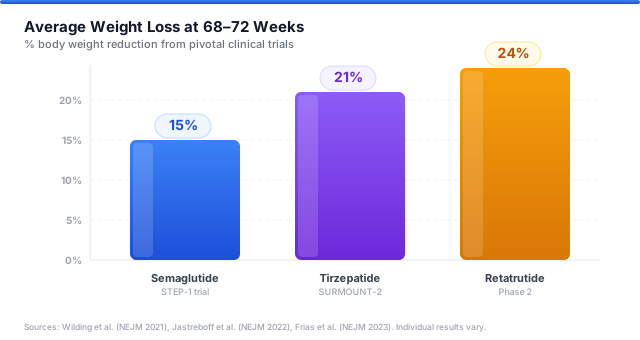
Average Weight Loss Over Time

Bar chart comparing average weight loss: Semaglutide 15%, Tirzepatide 21%, Retatrutide 24% at 68-72 weeks
Average body weight reduction from pivotal clinical trials. Individual results vary significantly. Data from STEP-1, SURMOUNT-2, and Phase 2 retatrutide trials.

References

  1. [1]Wilding JPH, Batterham RL, Calanna S, et al. Once-Weekly Semaglutide in Adults with Overweight or Obesity (STEP 1). N Engl J Med. 2021;384(11):989-1002.
  2. [2]Jastreboff AM, Aronne LJ, Ahmad NN, et al. Tirzepatide Once Weekly for the Treatment of Obesity (SURMOUNT-1). N Engl J Med. 2022;387(3):205-216.
  3. [3]Davies M, Faerch L, Khurt O, et al. Semaglutide 2.4 mg once a week in adults with overweight or obesity (STEP 2). Lancet. 2021;397(10278):871-884.
  4. [4]Rubino D, Abrahamsson N, Davies M, et al. Effect of Continued Weekly Subcutaneous Semaglutide vs Placebo on Weight Loss Maintenance (STEP 4). JAMA. 2022;327(4):331-340.
  5. [5]Wharton S, et al. Real-World Effectiveness of GLP-1 Receptor Agonists by Demographic Subgroup. Lancet Diabetes Endocrinol. 2025.
  6. [6]American College of Sports Medicine. Exercise Prescription for Patients on GLP-1 Receptor Agonist Therapy: Position Statement. 2025.

§ FAQ — Common questions about results

How much weight will I lose on a GLP-1 in the first month?

Most patients lose 2-5 pounds in the first month on a GLP-1 medication. This is primarily water weight and reduced food intake, as you are on the lowest starting dose. The real weight loss begins in months 2-3 as your dose increases. Do not be discouraged by modest first-month results — the GLP-1 is building up in your system and the appetite suppression will strengthen.

What does GLP-1 weight loss look like at 6 months?

At 6 months, semaglutide patients typically lose 15-25 pounds (8-12% body weight) and tirzepatide patients lose 20-35 pounds (10-15% body weight). This is the most dramatic transformation phase — most patients drop 2-3 clothing sizes and see significant changes in face, waist, and overall body shape. Health markers like blood pressure and cholesterol also improve measurably.

Will I regain weight if I stop taking GLP-1 medication?

Clinical data shows that most patients regain a significant portion of lost weight after stopping GLP-1 medication. The STEP 4 trial found that patients who stopped semaglutide regained approximately two-thirds of their lost weight within a year. This is because GLP-1s work by modifying appetite signaling — when the medication is removed, appetite returns to pre-treatment levels in most patients. For this reason, many providers recommend continuing GLP-1 treatment long-term.

Is tirzepatide better than semaglutide for weight loss?

Head-to-head data and indirect comparisons suggest tirzepatide produces slightly more weight loss than semaglutide. The SURPASS-2 trial and indirect treatment comparisons show approximately 3-5% greater body weight reduction with tirzepatide at maximum doses (22.5% vs 15-18%). However, individual response varies significantly, and both medications are highly effective. The best choice depends on your specific health profile, insurance coverage, and provider recommendation.

HIPAA Compliant Protected health data
503B Pharmacy Licensed compounding
Board Reviewed Medical oversight
FDA Registered Regulated facilities
Editor's Choice · Henry Meds
From $249/mo starting · Free 2-day shipping
Start → Affiliate link