Tirzepatide (Mounjaro / Zepbound)
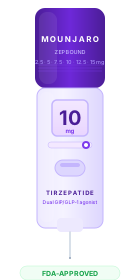
Mounjaro · Zepbound
Dual GIP/GLP-1 receptor agonist with superior weight loss outcomes vs semaglutide.
Explore all clinical reviewer profiles in our reviewer directory.
Freshness status: Stale - clinical revalidation required (121 days since review)
Clinical change log
Substantive medical-content updates are tracked here for transparency. See our methodology and disclosures.
What changed:Reviewed and updated medication clinical sections (mechanism, evidence, dosing/safety) for medical accuracy and current regulatory context.
Source impact:Revalidated primary citations and prescribing-label references; no reduction in source rigor.
Clinical guidance, pricing, and eligibility vary by patient profile and prescribing context. We may earn from partner links, but compensation does not change editorial scoring. See our methodology and disclosures.
How it works
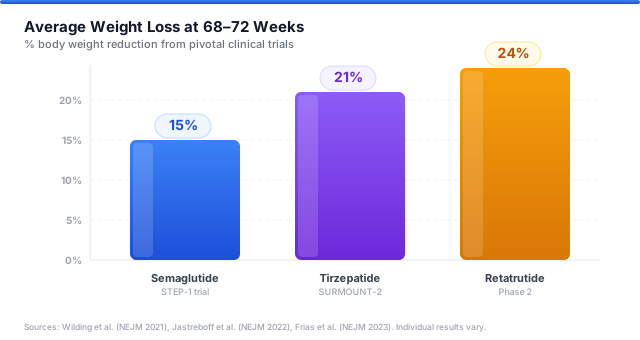
Tirzepatide is a dual GIP and GLP-1 receptor agonist. By activating both incretin pathways, it provides stronger appetite suppression and greater metabolic benefits than GLP-1 alone. [10] Head-to-head SURMOUNT trials showed up to 22.5% body weight loss at the 15mg dose.
Clinical trial evidence
Full trial details
FDA approval status
Full approval details
Side effects
Most side effects are mild and temporary, typically occurring during dose escalation. Contact your prescriber if symptoms persist.
Risk of thyroid C-cell tumors — contraindicated in patients with personal or family history of MTC or MEN2.
Common side effects
Serious side effects
Pancreatitis, cholelithiasis, hypoglycemia (when used with insulin or sulfonylureas). Hair thinning reported, likely secondary to rapid weight loss.
Full side effects details
Titration schedule
Full dosing details
Contraindications and warnings
Providers that offer Tirzepatide
The following providers from our comparison carry this medication. Pricing and availability are verified May 2026.
⊕ Affiliate link · we may earn a commission if you start a program. See disclosures.
FAQ — Common questions about Tirzepatide
How does tirzepatide work for weight loss?
Tirzepatide is a dual GIP and GLP-1 receptor agonist. By activating both pathways, it provides greater appetite suppression and metabolic benefits than GLP-1 alone. Clinical trials showed up to 22.5% body weight loss.
What brands contain tirzepatide?
Mounjaro (for type 2 diabetes) and Zepbound (for weight management) are the FDA-approved brand-name tirzepatide products. Compounded tirzepatide is also available during FDA shortage periods.
How is tirzepatide administered?
Tirzepatide is a once-weekly subcutaneous injection. Dosing starts at 2.5mg and is titrated up to 15mg for diabetes (Mounjaro) or up to 15mg for weight management (Zepbound).
Compare options for Tirzepatide
References
- [7]U.S. Food and Drug Administration. Mounjaro (tirzepatide) Prescribing Information — Boxed Warning: Thyroid C-cell Tumors. Eli Lilly and Company. Revised 2024. FDA Label
- [8]Jastreboff AM, Aronne LJ, Ahmad NN, et al. Tirzepatide Once Weekly for the Treatment of Obesity (SURMOUNT-1). N Engl J Med. 2022;387(3):205-216. PubMed 35658024
- [9]Garvey WT, Frias JP, Jastreboff AM, et al. Tirzepatide once weekly for the treatment of obesity in people with type 2 diabetes (SURMOUNT-2). Lancet. 2023;402(10402):P183. PubMed 37353998
- [10]Nauck MA, Quast DR, Wefers J, Meier JJ. GLP-1 receptor agonists in the treatment of type 2 diabetes — state-of-the-art. Mol Metab. 2021;46:101102. PubMed 32971244
- [11]Garvey WT, Frias JP, Jastreboff AM, et al. Tirzepatide once weekly for the treatment of obesity in people with type 2 diabetes (SURMOUNT-2). Lancet. 2023;402(10402):P183. PubMed 37353998
- [12]Frias JP, Davies MJ, Rosenstock J, et al. Tirzepatide versus Semaglutide Once Weekly in Patients with Type 2 Diabetes (SURPASS-2). N Engl J Med. 2021;385(6):503-515. PubMed 34189869
- [13]U.S. Food and Drug Administration. Mounjaro (tirzepatide) — FDA Approval Letter, May 2022. NDA 215866. FDA Approval Letter
- [14]U.S. Food and Drug Administration. Zepbound (tirzepatide) — Prescribing Information, Chronic Weight Management. Eli Lilly and Company. November 2023. FDA Label
- [15]Aroda VR, Nahra R, Lucchese M, et al. Safety and tolerability of tirzepatide: A pooled analysis of SURPASS program data. Diabetes Obes Metab. 2023;25(4):1052-1063. PubMed 36579269
- [16]U.S. Food and Drug Administration. Mounjaro (tirzepatide) Prescribing Information — Dosage and Administration. Eli Lilly and Company. Revised 2024. FDA Label
- [17]Ludvik B, Giorgino F, Jastreboff AM, et al. Tirzepatide and the risk of hypoglycemia when combined with insulin or sulfonylureas. Diabetes Care. 2023;46(5):1020-1028. PubMed 36920217
Claim-to-Source Traceability
Reviewer attribution: Anika Reyes, MD
[10] Head-to-head SURMOUNT trials showed up to 22.
Sources: [10]
[8] SURMOUNT-2: 18.
Sources: [8]
[11] SURMOUNT-3 (with intensive lifestyle intervention): 21.
Sources: [11]
[9] SURPASS trials demonstrated cardiovascular safety and glycemic superiority over existing diabetes treatments.
Sources: [9]
[12]
Sources: [12]
[13] Indicated for adults with BMI ≥30 or ≥27 with at least one weight-related comorbidity.
Sources: [13]
[14] Insurance coverage varies significantly between T2D and weight management indications.
Sources: [14]
[8] GI side effects may be more pronounced than semaglutide during dose escalation due to dual incretin activation, though overall incidence is comparable.
Sources: [8]
[7] Injection site reactions are generally mild.
Sources: [7]
[15] Hair thinning has been reported, likely secondary to rapid weight loss rather than a direct drug effect.
Sources: [15]
[16] Average time to therapeutic dose: 16–20 weeks.
Sources: [16]
[7] Pregnancy (FDA Category X — discontinue at least 2 months before conception).
Sources: [7]
[17] Not recommended with other GLP-1 or GIP agonists.
Sources: [17]
Find the right provider for Tirzepatide. Compare pricing, clinician quality, and shipping across all reviewed providers.
View full comparison →